Energy bills climb higher each month while dim, flickering bulbs strain the eyes. The wrong lighting works against both comfort and budget—a problem that feels impossible to ignore.
LED lighting solutions cover both indoor and outdoor needs with efficient, long-lasting illumination. Indoors, they offer adjustable warmth for comfort and focus. Outdoors, they deliver bright security and soft ambiance while cutting energy use and maintenance hassle significantly.
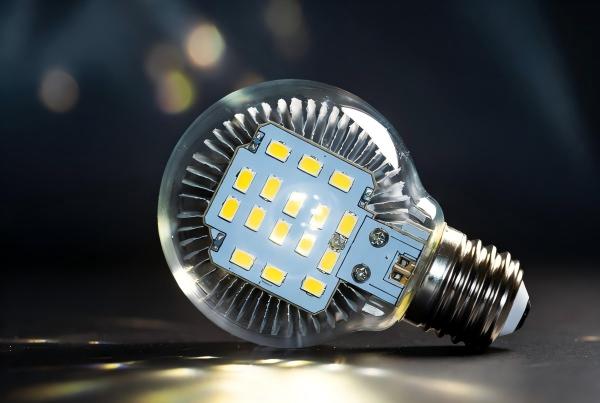
Light shapes how a room feels and how safe a property remains after dark, yet many spaces still rely on outdated bulbs that waste electricity and burn out fast. The switch to LED isn’t just about swapping one bulb for another—it’s about rethinking how a space is used, layer by layer. A well-planned LED setup means reading lights that don’t fatigue the eyes, porch lights that deter unwanted visitors, and garden accents that turn a backyard into an evening retreat. Both indoors and out, the technology has matured to offer options that match nearly any fixture, taste, or practical demand.
Why LED Lighting Is a Smart Choice for Modern Spaces?
Halogen bulbs get scorching hot within minutes, and fluorescent tubes hum annoyingly as they age—frustrations that modern spaces no longer need to tolerate when a cooler, quieter alternative exists.
LED lighting uses up to 80% less energy than incandescent bulbs and lasts 15 to 25 times longer. This efficiency slashes utility bills and reduces replacement waste, while modern LEDs also offer better color rendering and instant full brightness without warm-up delays.
Beyond the obvious savings, LEDs fundamentally change how lighting can be designed into a space. Older technologies forced compromises: brightness often came with excessive heat, and energy efficiency usually meant harsh, unflattering light. LEDs sidestep these trade-offs by producing lumens without the infrared heat waste. This means fixtures can be slimmer, placed closer to materials like wood or fabric without scorching risk, and integrated into smart systems that adjust color temperature throughout the day to match human circadian rhythms. For commercial spaces, the lower heat output also reduces air conditioning load—a secondary saving that adds up fast. The table below breaks down how LED advantages translate into real-world impact.
| Advantage | Practical Outcome |
|---|
| Low energy draw | Noticeably lower monthly bills even with extended use |
| Long lifespan | Fewer bulb changes, ideal for hard-to-reach fixtures |
| Cool operation | Safer near children, pets, and heat-sensitive materials |
| Instant full brightness | No waiting for light to "warm up" in cold weather |
| Design flexibility | Slim panels, strips, and color-tunable options for any layout |
Indoor LED Lights for Comfortable and Efficient Everyday Use
A living room lit by a single harsh overhead fixture feels flat and uninviting, while a kitchen with shadows on the countertop makes chopping vegetables a hazard—poor indoor lighting quietly undermines both mood and function.
Indoor LED lights provide layered illumination for different activities: warm-toned general lighting for relaxation, bright task lighting for kitchens and study areas, and accent lighting to highlight architectural features, all while cutting indoor energy consumption substantially.
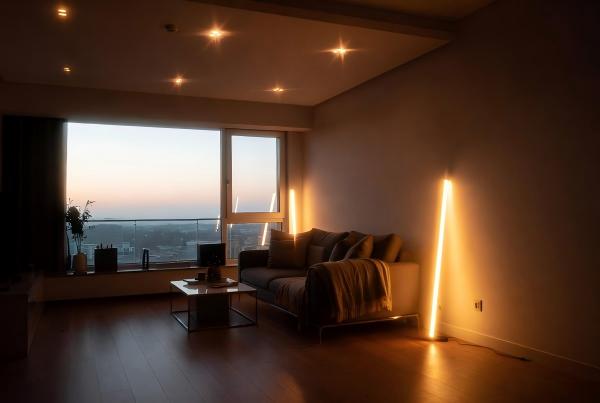
Creating comfortable indoor light isn’t about blasting every corner with the same brightness—it’s about matching color temperature and intensity to the activity. Warm white LEDs around 2700K to 3000K mimic the golden glow of sunset, telling the brain it’s time to unwind, which makes them perfect for bedrooms and lounges. Cool white options in the 4000K to 5000K range sharpen focus and reveal true colors, suiting workshops, laundry rooms, and makeup areas. Dimmable LED circuits add yet another layer of flexibility, shifting a dining room from homework central to intimate dinner setting with a single adjustment. For modern homes, panel lights offer clean, ceiling-flush solutions, while flexible strip lights tuck under cabinets and shelves to eliminate dark workspaces without bulky fixtures.
Outdoor LED Lights for Safety, Visibility, and Atmosphere
Front steps disappear in shadow, the driveway becomes a guessing game after dusk, and a lovely garden vanishes completely once the sun drops—leaving safety and curb appeal entirely at the mercy of daylight.
Outdoor LED lights cover three essential functions: security lighting with bright motion-activated floods, pathway illumination for safe navigation, and decorative accent lighting that extends living space into the yard with minimal energy impact and weather-resistant durability.
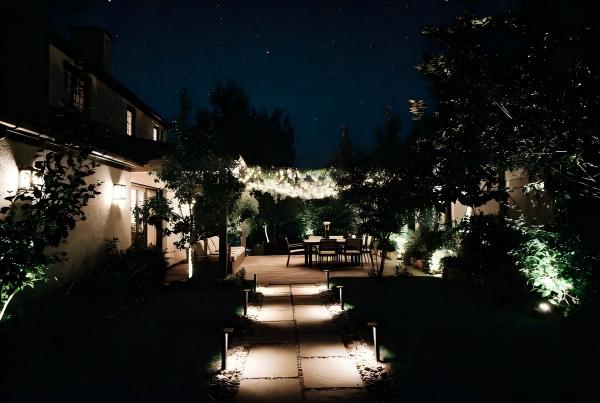
The outdoors places demands on lighting that indoor spaces rarely face—rain, dust, temperature swings, and the need for wide, even coverage. LED fixtures built for exterior use come with IP ratings that indicate moisture and dust resistance; an IP65 or IP66 rating ensures the housing shrugs off downpours and resists corrosion over years of service. Motion-sensor floodlights deserve careful placement: angled to capture movement at entry points without blinding neighbors or washing out security camera footage. Low-voltage landscape LEDs on stakes or buried well lights can trace a pathway or uplight a specimen tree, creating depth that turns a flat nightscape into something layered and intentional. Solar-integrated LED options add installation flexibility where wiring is impractical, though hardwired systems generally maintain higher, more consistent brightness through all seasons.
How to Choose the Right LED Light for Your Needs?
Aisle after aisle of bulbs with cryptic labels like “800 lumens” and “CRI 90” can intimidate anyone who simply wants a well-lit home—decision fatigue sets in before a single fixture gets upgraded.
Choose LED lights by matching lumens to desired brightness, color temperature to room purpose, and fixture type to installation location. For outdoors, prioritize weather ratings and coverage pattern; for indoors, focus on dimming compatibility and the light’s color accuracy for its intended tasks.
Breaking down the selection process into a few simple checks removes the overwhelm. First, ignore the old habit of shopping by watts—lumens are what matter now. A 60-watt equivalent sits around 800 lumens, which works well for table lamps and hallways; task areas benefit from 1000 lumens or more. Second, check the CRI number: anything above 90 renders colors with near-natural accuracy, important for artwork, food prep, and bathrooms. Third, verify that the bulb and the dimmer switch are compatible; not every LED dims smoothly with older dimmer modules, and a mismatched pair will flicker annoyingly. For outdoor projects, beam angle joins the priority list—a narrow beam suits spotlighting, while wide floods blanket driveways and patios. The table below summarizes the key selection criteria for common scenarios.
| Scenario | Recommended Specs | Extra Consideration |
|---|
| Living room relaxation | 800 lm, 2700K–3000K, CRI 90+ | Dimmable for evening flexibility |
| Kitchen work zones | 1000+ lm, 4000K, CRI 90+ | Under-cabinet strips eliminate shadows |
| Driveway and entry security | 1500+ lm, 5000K, IP65+ | Motion sensor range and detection angle |
| Garden accent lighting | 200–500 lm, 2700K–3000K, IP65+ | Solar vs. hardwired based on sunlight access |
Once the technical boxes are ticked, the final test is simply how the light feels in the actual space. A quick trial of a single bulb in the intended room at the intended time of day reveals what specification sheets can’t—whether the light makes the space genuinely more livable.
Conclusion
The right LED light turns a house into a visible, comfortable home after dark—inside and out, without punishing the utility bill or demanding constant maintenance.
 English