Struggling to track microclimates in your backyard with generic, delayed phone apps? Relying on regional forecasts often leaves you unprepared for sudden weather shifts, ruining outdoor plans and property maintenance.
The primary difference is internet connectivity: a wireless weather station uses local radio frequencies to send data from outdoor sensors to an indoor console, while a Wi-Fi weather station connects to your home network to upload data online for remote tracking via smartphone apps.
Choosing between these two technologies doesn't mean one is inherently better than the other; rather, it's about matching their distinct data transmission methods to your daily tracking habits. Let’s dive into how each system operates so you can make an informed investment for your home.
What Is a Home Weather Station?
Frustrated by inaccurate regional weather reports that miss your neighborhood entirely? Standard local forecasting misses localized temperature drops and wind shifts, leaving your home unprotected against sudden, micro-level environmental changes.
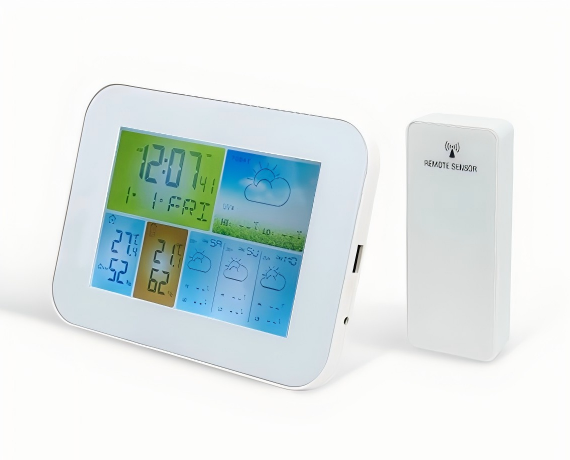
A home weather station is a localized standalone system comprising outdoor sensors that transmit real-time meteorological data—like temperature, humidity, and barometric pressure—directly to a dedicated indoor digital display console without requiring an internet connection.
Standalone Reliability and Core Mechanics
Standard home weather stations function as closed-loop systems. They rely on localized radio frequencies (typically 433 MHz or 915 MHz) to send data from the sensor array to your indoor receiver. Because they operate independently of the internet, they are highly reliable during severe weather events when cellular towers and Wi-Fi networks frequently fail.
Sensor Types and Maintenance Foundations
Traditional wireless setups rely on highly stable analog and low-power digital sensor elements. Because they do not need to constantly broadcast data packets over complex internet protocols, their battery life is exceptionally long—often lasting up to two full years on a single set of AA lithium batteries. Maintenance is minimal, requiring only occasional clearing of the rain gauge debris tray or wiping down the solar radiation shield.
Ideal Use Cases for Offline Monitoring
These stations are perfect for users prioritizing privacy, straightforward operation, and offline resilience.
Remote Cabins: Excellent for areas with weak or non-existent internet infrastructure.
Data Privacy Purists: Ideal for individuals who prefer keeping their local environmental data off third-party cloud servers.
Simple Desktop Tracking: Perfect for casual observers who want immediate glanceable data on a physical console without dealing with mobile applications.
What Makes a Wi-Fi Weather Station Different?
Tired of leaving your property vulnerable to unexpected storms while you are away at work? Without remote monitoring, a sudden freeze or downpour can destroy delicate backyard gardens or flood greenhouses before you can react.
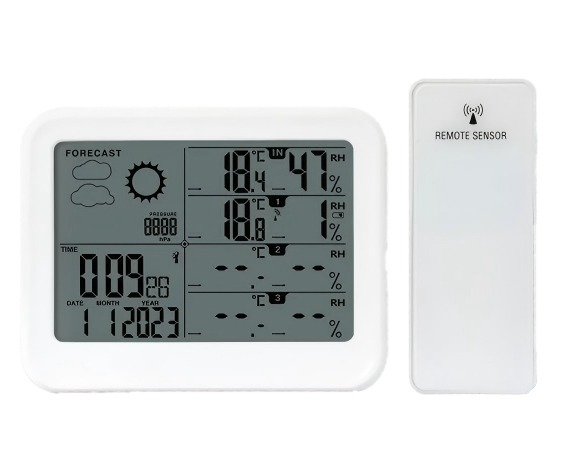
A Wi-Fi weather station connects directly to your home network, transmitting real-time localized sensor data to cloud-based platforms, enabling you to monitor your exact backyard conditions from anywhere via smartphone apps or smart home integrations.
The Power of Cloud Connectivity
The defining feature of a Wi-Fi weather station is its ability to push hyper-local data to global weather networks like Weather Underground or WeatherCloud. This transforms your isolated hardware into an active node within a global meteorological community. Instead of being tethered to a physical screen inside your living room, your data travels with you wherever you have a cellular data connection.
Smart Home Integration and Automation
For modern homeowners, the true value lies in ecosystem synergy. Wi-Fi stations act as triggers for automated household tasks, creating an intelligent living space that adapts dynamically to environmental shifts.
Automated Irrigation: Program your smart sprinklers to skip watering if the station records actual rainfall.
HVAC Efficiency: Automatically adjust smart thermostats or turn on dehumidifiers based on real-time outdoor tracking.
Motorized Blinds: Trigger automated window blinds to close when solar radiation sensors detect intense afternoon heat.
Network Requirements and Security Considerations
Operating a Wi-Fi model requires a stable 2.4GHz network band, as 5GHz bands lack the long-range penetration power needed to reach deep into a backyard or garden. Homeowners must also ensure their network security settings allow for continuous smart device handshakes without dropping the signal, which requires a moderate level of technical comfort during the initial pairing process.
Wi-Fi Weather Station vs Wireless Weather Station: Key Features Compared?
Confused by overlapping technical jargon when comparing different wireless monitoring systems? Choosing the wrong sensor configuration can result in poor signal penetration through walls or a complete lack of historical data tracking.
Comparing wireless stations and Wi-Fi stations requires analyzing how data is transmitted, stored, and viewed, as both configurations offer unique operational advantages depending on your specific environmental monitoring priorities.
Structural and Functional Variations
To help evaluate these systems objectively, the table below highlights the functional differences between a standard wireless station and an internet-connected Wi-Fi model.
| Feature | Wireless Weather Station | Wi-Fi Weather Station |
|---|
| Data Accessibility | On-screen console only (local viewing) | Smartphone app, tablet, web browser (remote viewing) |
| Internet Requirement | None (completely offline) | Continuous 2.4GHz Wi-Fi connection required |
| Smart Home Support | None | Compatible with Alexa, Google Assistant, IFTTT |
| Data Logging | Limited to historical highs/lows on console | Extensive cloud storage with downloadable graphs |
| Power Resilience | High (unaffected by internet or power outages) | Sensor runs offline, but remote sync stops during outages |
Data Preservation and Analysis
Standard models generally offer a rolling 24-hour memory of maximum and minimum records. Conversely, Wi-Fi models log years of continuous data points in the cloud, allowing amateur meteorologists to track seasonal trends, analyze rainfall variations over time, and export CSV files for deeper analytical study.
Signal Range and Structural Barriers
Standard RF wireless systems boast impressive line-of-sight ranges up to 300 feet because low-frequency radio signals pierce through exterior stucco, brick, and drywall with minimal attenuation. Wi-Fi systems are bound by the range of your home router. If your backyard sensor suite is placed too far from the main house, you may need a dedicated outdoor Wi-Fi extender to maintain a stable cloud connection.
How to Choose the Best Weather Station for Your Lifestyle?
Worried about investing in a complex weather system that is either too difficult to set up or lacks the advanced remote tracking tools your smart home actually needs?
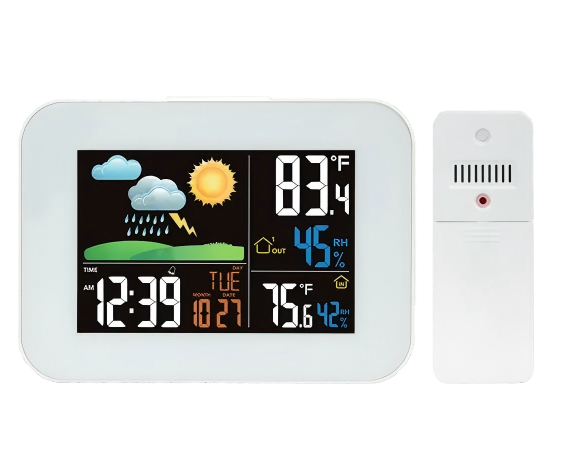
Choosing the right station depends entirely on balancing your technical comfort level, your desire for remote data access, and the specific automation requirements of your property's daily maintenance routine.
Analyzing Your Technical Infrastructure and Goals
To determine the best fit, evaluate your physical environment and usage goals. If you live in an area with frequent internet drops or want a simple setup without firmware updates, a traditional wireless station is a highly reliable option. However, if you manage a hobby farm, travel frequently, or want to log long-term climate trends, the cloud logging capabilities of a Wi-Fi system are indispensable.
Budget Considerations and Longevity
Standalone wireless units generally feature lower upfront costs because they do not involve cloud subscription management or proprietary app licensing. Wi-Fi units sit at a higher price point but offer continuous value updates through over-the-air firmware improvements. When choosing, consider whether you view your weather station as a set-and-forget hardware utility or an evolving smart home ecosystem component.
Conclusion
Whether choosing an offline wireless model for local reliability or a Wi-Fi station for remote smart monitoring, select the system that best matches your lifestyle and data needs.
 English